Guides desk
Esports viewing and tactical guides
Evergreen playbooks: how to watch a broadcast, read a bracket, run a VOD review, and keep rumor hygiene intact.

90-minute match viewing plan
Minutes 0–15
Talent intro + stage context. Note series length.
Minutes 15–60
Pick one duty to track (entry, IGL, support).
Minutes 60–90
Write three turning points or mark VOD chapters.

Notebook method
Paper or markdown both work. The habit is constrained attention.
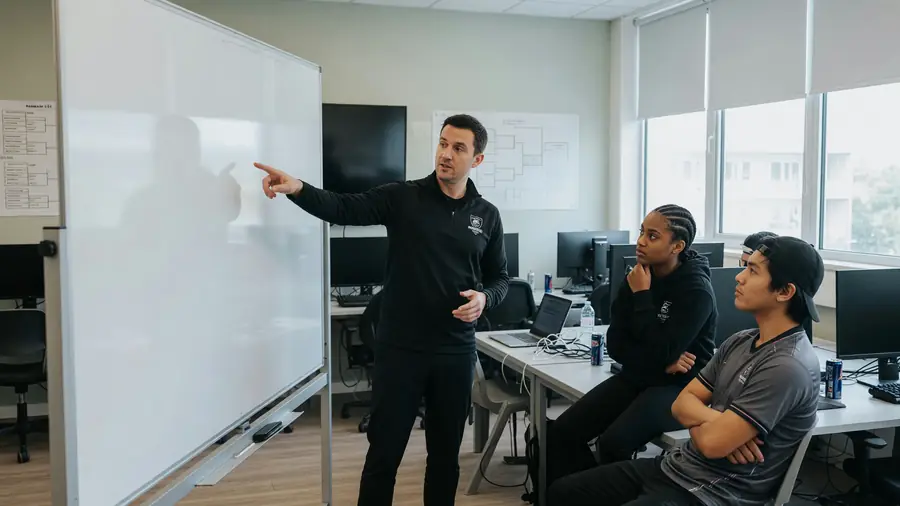
Coach board literacy
Boards explain jobs. They are not proof of a secret strat without the series itself.
Bracket literacy
Name the stage, the cut line, and whether a reset exists. Then — and only then — talk about destiny. Pair with the tournaments desk.
VOD review workflow
| Step | Action | Output |
|---|---|---|
| 1 | Jump chapters | Candidate swings |
| 2 | Lock three moments | Timestamp list |
| 3 | Capture decision, not only aim | One sentence each |
| 4 | Cross-check patch | As-of note |

Accessibility add-on
Check captions, language tracks, and bitrate before long sessions.
Glossary starter
- Exec
- Coordinated site or objective hit with staged utility.
- Default
- Non-rushed spacing to gather information.
- Throw round
- Intentional save or low-economy round — context matters.
- Observer
- Broadcast camera operator package, not a player role.
- Admin pause
- Official halt; not a tactical timeout.
- Veto
- Map/side selection process logged by officials.
Extended guides desk notes
Guides are where Clutch teaches habits that survive calendar churn. A ninety-minute watch plan, a bracket literacy primer, and a VOD workflow will still help next season when the names on the stage change. That is why these pages avoid temporary seed gossip.
Constrained attention is the product. Tracking one player duty through a map teaches more than tabbing between five chats. Writing three turning points creates a shareable memory without demanding a full demos career. Accessibility checks — captions, language tracks, bitrate — belong in the same ritual as tactical notes.
Bracket literacy prevents category errors. Readers who can name Swiss bars, cut lines, and reset finals are harder to mislead with decorative trees. Pair guides with the tournaments desk when an example event is confirmed; keep the guide itself evergreen.
Rumor hygiene belongs in education, not only in news policy. If a friend forwards an unsigned roster image, the guide should give language for why it does not enter a preview header. Social speed is not a source upgrade.
Evergreen habits
Watch plans outlive seed drama.
One duty focus
Depth beats tab chaos.
Accessibility ritual
Captions and bitrate are part of craft.
Bracket language
Name the machine before the story.
Rumor scripts
Teach refusal language politely.
Outbound deep links
Guides should open desks, not dead-end.
Related
Tournaments
Stage machines and format literacy.
Matches
Windows, previews, film room habits.
Teams
Identity panels and verification dates.
Players
Role atlas and source history.
Games
Patch boards and title desks.
Guides
Watch plans and tactical notebooks.
Dated announcements and corrections.
Responsible play
Age boundary and safer habits.
Habits that still work next season
Evergreen guides should be boring in the best way. They teach attention management, bracket language, and VOD hygiene. They do not depend on a single superstar’s current team. When examples are needed, prefer structural examples over celebrity examples.
A ninety-minute watch plan exists because infinite VODs create fake diligence. Constrained practice beats ambient background noise. Tracking one duty across a map builds pattern recognition that highlight compilations cannot.
Accessibility is craft. Captions, language tracks, color contrast on your own note templates, and bitrate limits on mobile are part of being a serious viewer, not optional niceties.
Boring on purpose
Habits beat celebrity examples.
Time-boxed watching
Ninety minutes beats endless tabs.
One duty focus
Pattern recognition engine.
Accessibility craft
Captions and bitrate in the ritual.
Bracket vocabulary
Prevents decorative-tree mistakes.
Rumor refusal scripts
Polite no without arrogance.
From guide to desk
Each guide should eject readers into a living desk when they need current fields: tournaments for stage machines, matches for windows, games for patch boards, news for dated announcements. Guides that hoard readers without outbound links become dusty PDFs in HTML clothing.
Guide FAQs
What does the guides desk refuse to invent?
Live scores, unverified rosters, prize pools, and patch numbers without a dated primary source.
How often are pages updated?
When primary sources move. Evergreen methodology stays stable; dated fields change with as-of stamps.
Can I trust social screenshots?
Not as standings. Social can trigger reporting, but confirmation needs publisher, TO, or team primary channels.
Where do viewing rights fit?
In the viewing matrix. We describe platform types and accessibility checks without guaranteeing your local rights.
Is there a mobile app requirement to read Clutch?
No. The site is the editorial surface. App and download pages explain official channels only.
How do affiliate routes appear?
As disclosed first-party paths separate from rankings. Editorial does not sell outcomes.
What age is this for?
18+. Competitive coverage is not underage wagering content.
How do I send a correction?
Use the contact page with the URL, the claim, and a primary source link.
Does guides coverage drift into unrelated sports or casino modules?
No. Clutch stays on esports competition literacy.
Why are some tables partly empty?
Empty is honest. We show field labels so you know what to verify rather than filling fiction.